Your Skin Is Always Renewing. Sometimes We Give That Process a More Focused Signal.
When people hear “laser resurfacing,” it can sound like we’re simply removing the surface of the
skin.
Modern fractional resurfacing is more intentional than that.
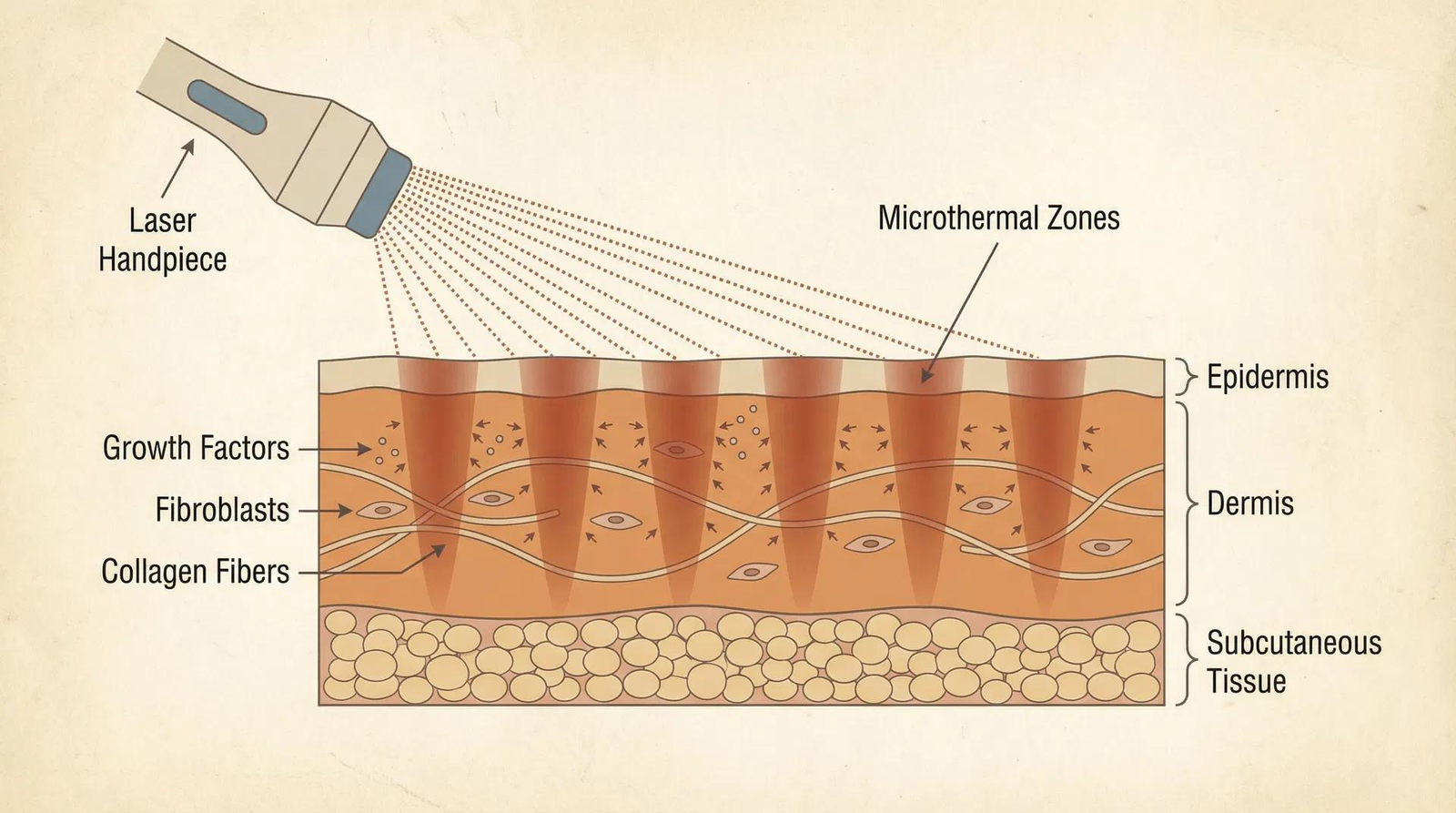
NOUVADerm uses a 1927 nm thulium fractional laser that allows us to deliver controlled laser
energy into selected portions of the skin while leaving surrounding areas untreated.
The goal is to create a controlled treatment response that supports the skin’s natural renewal
process.
What Does “Fractional” Mean?
Imagine renovating a lawn.
You wouldn’t necessarily dig up every square inch of grass.
Instead, you might create many small treatment zones while leaving healthy areas between
them.
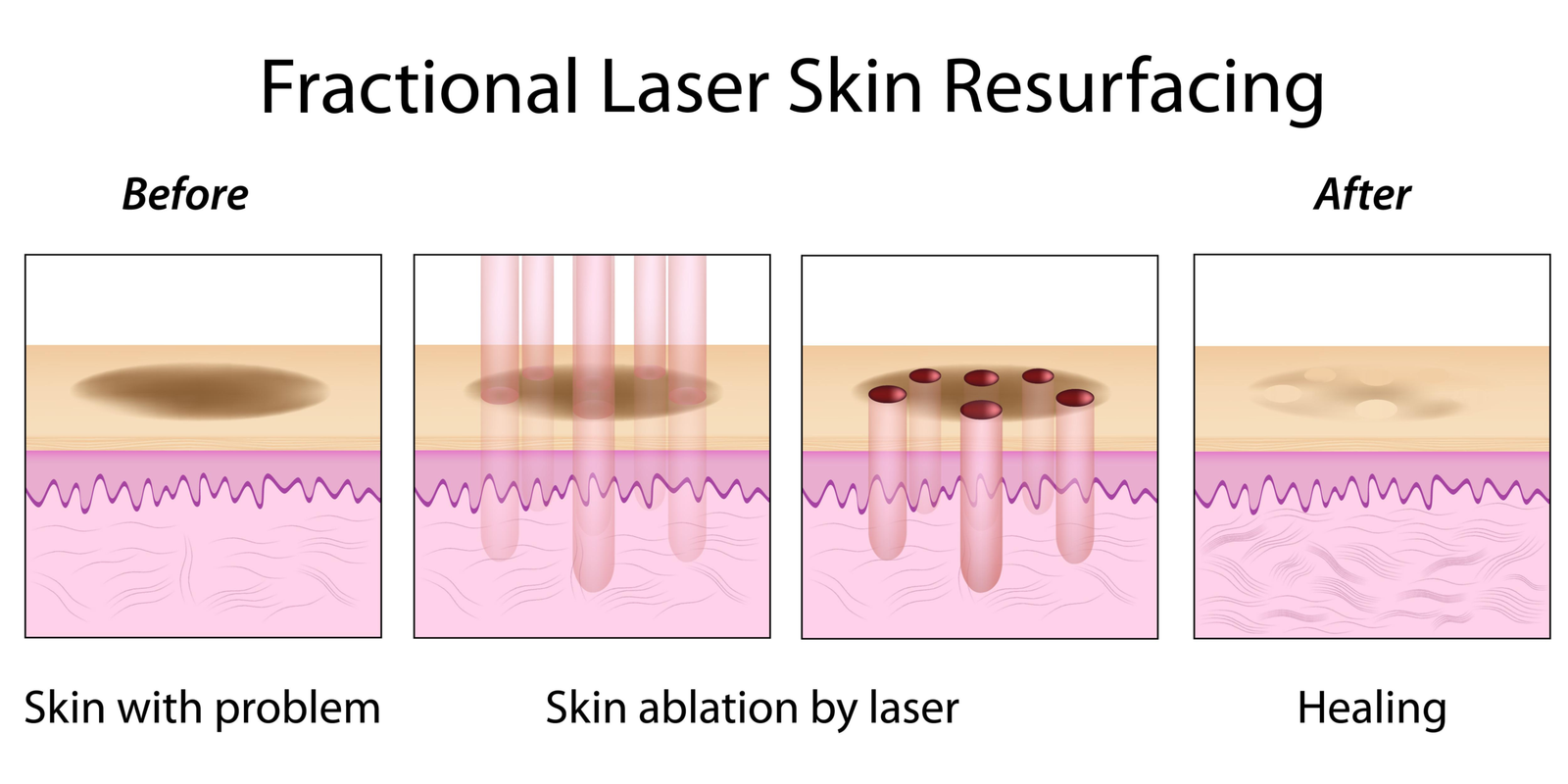
Fractional laser treatment works with a similar concept.
The laser creates microscopic treatment zones while surrounding tissue remains available to
participate in recovery.
Treat strategically. Allow the skin to respond.
That’s one reason fractional technology gives us flexibility when building a resurfacing plan.
Why 1927 nm?
Different laser wavelengths interact with tissue differently.
NOUVADerm uses a 1927 nm thulium wavelength, which is strongly absorbed by water within
the skin.
That makes it useful for controlled fractional treatment of superficial skin concerns and skin
renewal.
The platform can deliver different levels of treatment—from gentler non-ablative approaches to
more intensive settings—depending on the protocol and treatment goal.
What Are We Trying to Improve?
Nouvaderm may be incorporated into treatment plans for concerns such as:
● Uneven skin tone
● Sun-related pigmentation
● Rough or uneven texture
● Enlarged-looking pores
● Fine lines
● Acne-scar appearance
● Other visible signs of skin aging
Your Natural Focus reference also positions Nouvaderm around texture, tone, pores, fine
lines, and collagen support rather than promising a specific result or recovery timeline.
Is Every Nouvaderm Treatment the Same?
No.
And that’s important.
Laser resurfacing shouldn’t automatically mean:
“Turn the machine up as high as possible.”
Treatment intensity can be adjusted based on your:
● Skin concerns
● Skin type
● Treatment area
● Previous treatments
● Desired level of correction
● Comfort with recovery time
Sometimes our goal is a lighter refresh.
Sometimes a more involved resurfacing protocol makes sense.
Nouvaderm vs. RF Microneedling
Both can support collagen-focused skin rejuvenation, but they get there differently.
Nouvaderm
Uses fractional laser energy to create controlled treatment zones within the skin.
We often think about it when concerns include tone, pigmentation, texture, pores, and fine lines.
EXION RF Microneedling
Uses microneedles plus radiofrequency energy delivered into selected depths of the skin.
It may be especially useful when we’re focusing on texture, pores, acne scarring, fine lines, and
laxity.
Neither is universally better.
The decision depends on what we’re trying to change.
What About Downtime?
This is another reason customization matters.
How your skin looks and feels afterward can vary based on the treatment intensity, area treated,
and your individual response.
Instead of promising “no downtime,” we prefer to discuss the level of treatment and recovery
you are comfortable with before we begin.
Supporting the Skin After Resurfacing
The procedure is only part of the plan.
Depending on your treatment, we may incorporate:
● EXO|E® topical skin support
● Celluma® LED / red light therapy
● Hydrinity
● HydroPeptide
● Customized post-treatment home care
Think of resurfacing as creating the signal.
Then we support the environment in which your skin responds.
Nouvaderm Beyond Facial Skin
NOUVADerm also has protocols used within hair and scalp care.
At Natural Focus, that means the same platform may have a role in both our skin-renewal and
Hair & Scalp Wellness programs, depending on the protocol selected.
The Natural Focus Difference
We don’t think laser treatment should be about chasing the strongest setting.
We think it should be about choosing the right wavelength, right intensity, and right
recovery plan for the individual patient.
Create a controlled stimulus. Support renewal. Respect the skin’s ability to
respond.